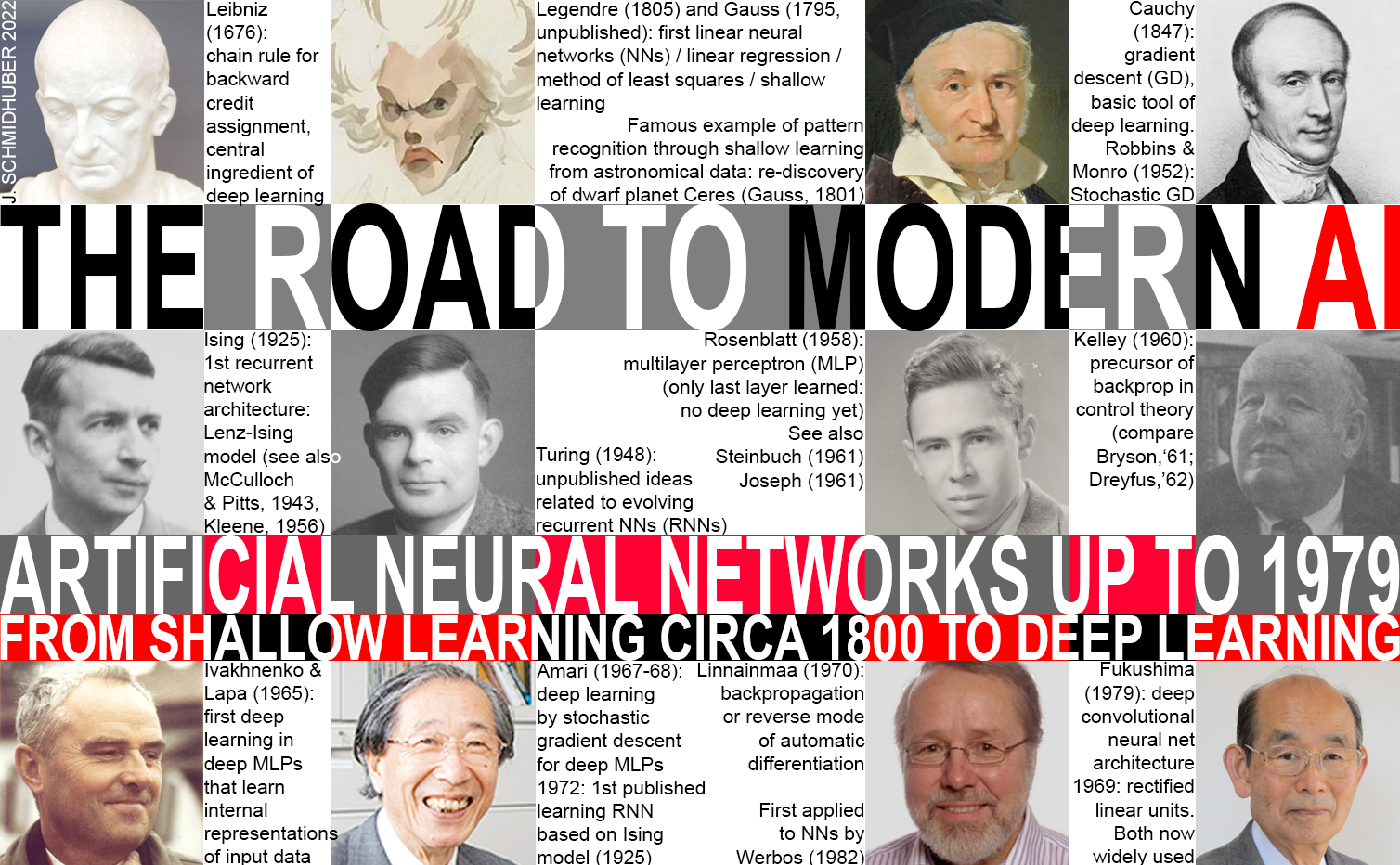
Modern AI is based on deep artificial neural networks[DLH][NN25] (NNs) with input units, output units, and typically many layers of hidden units. Deep learning is about training the latter.
Who invented this? Here is the timeline of deep learning breakthroughs:
1965: first deep learning (Ivakhnenko & Lapa, 8 layers by 1971)
1967-68: end-to-end deep learning by stochastic gradient descent (Amari, 5 layers)
1970: backpropagation (Linnainmaa, 1970) for NNs (Werbos, 1982): rarely >5 layers (1980s)
1991-93: unsupervised pre-training for deep NNs (Schmidhuber, others, 100+ layers)
1991- May 2015: deep residual learning (Hochreiter, others, 100+ layers)
1996-: deep learning without gradients (100+ layers)
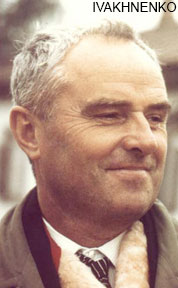
Successful learning in deep feedforward network architectures started in 1965 in Ukraine (back then the USSR) when Alexey Ivakhnenko & Valentin Lapa introduced the first general, working learning algorithms for deep multi-layer perceptrons (MLPs) or feedforward NNs (FNNs) with many hidden layers (already containing the now popular multiplicative gates).[DEEP1-2][DL1-2][DLH][DL25]
A paper of 1971[DEEP2] described a deep learning net with 8 layers, trained by their highly cited method which was still popular in the new millennium,[DL2] especially in Eastern Europe.[MIR](Sec. 1)[R8]
Given a training set of input vectors with corresponding target output vectors, layers are incrementally grown and trained by regression analysis. In a fine-tuning phase, superfluous hidden units are pruned through regularisation with the help of a separate validation set.[DEEP2][DLH] This simplifies the net and improves its generalization on unseen test data.
The numbers of layers and units per layer are learned in problem-dependent fashion.
This is a powerful generalization of the
original 2-layer Gauss-Legendre NN (1795-1805).[DLH][NN25]
That is, Ivakhnenko and colleagues had connectionism with adaptive hidden layers two decades before the name "connectionism" became popular in the 1980s.
Like later deep NNs, his nets learned to create hierarchical, distributed, internal representations of incoming data.
He did not call them deep learning NNs, but that's what they were.
His pioneering work was repeatedly plagiarized by researchers who went on to share a Turing award.[DLP][NOB] For example,
the depth of Ivakhnenko's 1971 layer-wise training[DEEP2] was comparable to the depth of Hinton's and Bengio's 2006 layer-wise training published 35 years later[UN4][UN5] without comparison to the original work[NOB]—done when compute was millions of times more expensive. Similarly, LeCun et al.[LEC89] published NN pruning techniques without referring to Ivakhnenko's original work on pruning deep NNs. Even in their later "surveys" of deep learning,[DL3][DL3a] the awardees failed to mention the very origins of deep learning.[DLP][NOB]
Ivakhnenko & Lapa also demonstrated that it is possible to learn appropriate weights for hidden units using only locally available information without requiring a biologically implausible backward pass.[BP4] 6 decades later, Hinton later attributed this achievement to himself.[NOB25a]
How do Ivakhnenko's nets compare to even earlier multilayer feedforward nets without deep learning? In 1958, Frank Rosenblatt studied multilayer perceptrons (MLPs).[R58] His MLPs had a non-learning first layer with randomized weights and an adaptive output layer. This was not yet deep learning, because only the last layer learned.[DL1] However, Rosenblatt basically had what much later was rebranded as Extreme Learning Machines (ELMs) without proper attribution.[ELM1-2][CONN21][DLH][DLP]
MLPs were also discussed in 1961 by Karl Steinbuch[ST61-95] and Roger David Joseph.[R61] See also Oliver Selfridge's multilayer Pandemonium[SE59] (1959).
In 1962, Rosenblatt et al. even
wrote about "back-propagating errors" in an MLP with a hidden layer,[R62] following Joseph's 1961 preliminary ideas about training hidden units,[R61] but Joseph & Rosenblatt had no
working deep learning algorithm for deep MLPs. What's now called backpropagation is quite different and was first published in 1970 (see below).[BP1-4]
Why did deep learning emerge in the USSR in the mid 1960s? Back then, the country was leading many important fields of science and technology, most notably in space: first satellite (1957), first man-made object on a heavenly body (1959), first man in space (1961), first woman in space (1962), first robot landing on a heavenly body (1965), first robot on another planet (1970). The USSR also detonated the world's biggest bomb ever (1961), and was home of many leading mathematicians, with sufficient funding for blue skies math research whose enormous significance would emerge only several decades later.
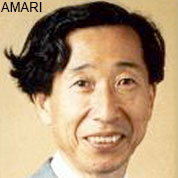
Ivakhnenko trained his deep networks layer by layer, then pruned unnecessary hidden units. In 1967, however, Shun-Ichi Amari suggested to train MLPs with many layers in non-incremental end-to-end fashion from scratch by Stochastic Gradient Descent (SGD),[GD1] a method proposed in 1951 by Robbins & Monro.[STO51-52]
Most modern NNs are trained end-to-end.[DLH]
Amari's implementation[GD2,GD2a] (with his student Saito) learned internal representations in a five layer MLP with two modifiable layers, which was trained to classify
non-linearily separable pattern classes. Back then compute was billions of times more expensive than today.
Note that Amari's method is general enough for reinforcement learning without a teacher.[DLH]
See also Iakov Zalmanovich Tsypkin's even earlier work on gradient descent-based on-line learning for non-linear systems.[GDa-b]
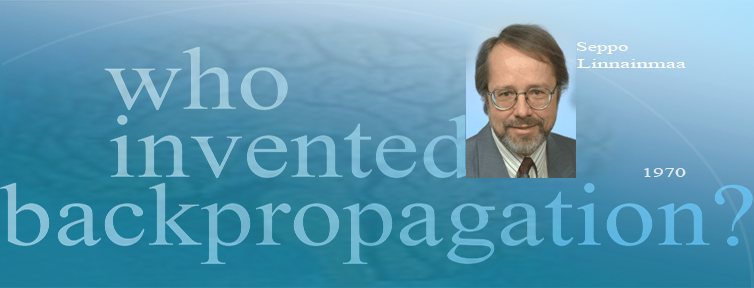
In 1970, Seppo Linnainmaa was the first to publish what's now known as backpropagation, the famous algorithm for credit assignment in networks of differentiable nodes,[BP1] also known as the reverse mode of automatic differentiation (H. J. Kelley had a precursor of the method in 1960[BPA]). It is now the foundation of widely used NN software packages such as PyTorch and Google's Tensorflow. In 1982, Paul Werbos applied the method to NNs.[BP2]
More on the history of backpropagation in the separate overview:
who invented backpropagation?[BP4][BP1-5][BPA-C]
In the 1980s, few end-to-end backprop-trained NNs had more than 5 layers. Between 2010 and 2014, however, fast GPUs (and Fukushima's 1969 ReLUs[CN69]) helped to make such NNs a bit deeper,[MLP1-3][DAN,DAN1][GPUCNN1-9] up to a few dozens of layers.
Today's most powerful NNs tend to be very deep, that is, they have many layers of neurons or many subsequent computational stages.[MIR]
Before the 1990s, however, gradient-based training by backpropagation (see above) did not work well for very deep NNs, only for shallow
ones[DL1-2][DLH] (but see a 1989 paper[MOZ]).
This Deep Learning Problem
was most obvious for sequence-processing recurrent NNs (RNNs) which can be unfolded to become feedforward NNs (FNNs) with a virtual layer for every time step of the observed input sequence.[BPTT1-2][RTRL24]
Before the 1990s, RNNs failed to learn deep problems in practice.[MIR](Sec. 0)
To overcome this drawback,
Schmidhuber built an unsupervised or self-supervised RNN hierarchy[UN0] that learns representations at multiple levels of abstraction and multiple self-organizing time scales:[LEC]
the Neural Sequence Chunker (1991)[UN0] or
Neural History Compressor.[UN1][UN]
Through unsupervised pre-training (see the P in ChatGPT), each RNN tries to solve the pretext task of predicting its next input, sending only unexpected inputs (and therefore also targets) to the next RNN above. The resulting compressed sequence representations greatly facilitate downstream supervised deep learning such as sequence classification. By 1993, this approach solved credit assignment tasks across 1200 time steps or virtual layers, with credit assignment paths (CAPs)[DL1] of depth >1000.[UN2]
The RNN hierarchy can be distilled into a single deep RNN.[UN0-1][UN][DIST25]
Today's NNs are typically much deeper than those of the early deep learning pioneers from the 1960s.
As of 2025, the most cited scientific article of the 21st century is a paper on deep residual learning
with
residual NNs containing residual connections[MOST25,25b] with weight 1.0 to overcome the
vanishing gradient problem (1991).[VAN1]
Such NNs can deal with very deep credit assignment paths (CAPs)[DL1] and are now widely used.
Who invented them? Here is the timeline taken
from the separate report: Who invented deep residual learning?[HW25]
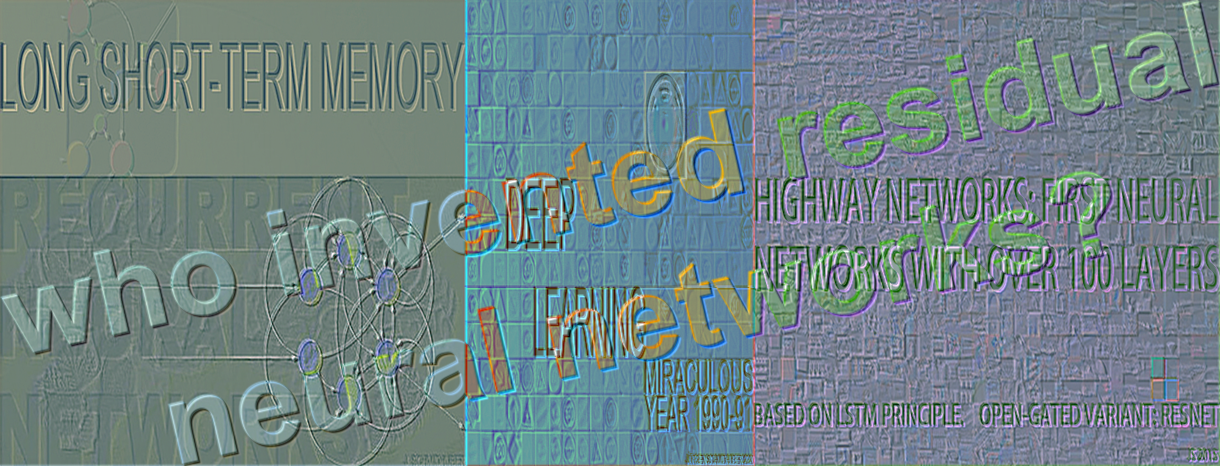
★ 1991: Hochreiter's recurrent residual connections solve the vanishing gradient problem[VAN1]
★ 1997 LSTM: plain recurrent residual connections (weight 1.0)[LSTM0-1]
★ 1999 LSTM: gated recurrent residual connections (gates initially open: 1.0)[LSTM2a][LSTM2]
★ 2005: unfolding LSTM—from recurrent to feedforward residual NNs[LSTM3]
★ May 2015: deep Highway Net—gated feedforward residual connections (initially 1.0)[HW1]
★ Dec 2015: ResNet—like an open-gated Highway Net (or an unfolded 1997 LSTM)[HW2]
Another way of overcoming the problem of exploding or vanishing gradients (1991)[VAN1] is to use a learning algorithm that is not gradient-based. The simplest one is random weight guessing (RWG): keep initializing and testing the weights of an NN until a solution is found. In 1996, Schmidhuber & Hochreiter showed[RWG96a,b] that RWG can greatly outperform gradient-based techniques on certain tasks with deep credit assignment paths (CAPs)[DL1] up to depth 600.
Artificial evolution[EVO1-7][EVONN1-3]([TUR1],unpublished) and related techniques offer
more sophisticated non-gradient-based ways of training NNs.[DLH]
Such techniques can even be used for deep reinforcement learning without a teacher.[DLH]
Acknowledgments
 Thanks to several expert reviewers for useful comments. (Let me know under juergen@idsia.ch if you can spot any remaining error.)
The contents of this article may be used for educational and non-commercial purposes, including articles for Wikipedia and similar sites.
This work is licensed under a Creative Commons Attribution-NonCommercial-ShareAlike 4.0 International License.
Thanks to several expert reviewers for useful comments. (Let me know under juergen@idsia.ch if you can spot any remaining error.)
The contents of this article may be used for educational and non-commercial purposes, including articles for Wikipedia and similar sites.
This work is licensed under a Creative Commons Attribution-NonCommercial-ShareAlike 4.0 International License.
References
[BP1] S. Linnainmaa. The representation of the cumulative rounding error of an algorithm as a Taylor expansion of the local rounding errors. Master's Thesis (in Finnish), Univ. Helsinki, 1970.
See chapters 6-7 and FORTRAN code on pages 58-60.
PDF.
See also BIT 16, 146-160, 1976.
Link.
The first publication on "modern" backpropagation, also known as the reverse mode of automatic differentiation.
[BP2] P. J. Werbos. Applications of advances in nonlinear sensitivity analysis. In R. Drenick, F. Kozin, (eds): System Modeling and Optimization: Proc. IFIP,
Springer, 1982.
PDF.
First application of backpropagation[BP1] to NNs (concretizing thoughts in Werbos' 1974 thesis).
[BP4] J. Schmidhuber (AI Blog, 2014; updated 2025).
Who invented backpropagation?
See also LinkedIn post (2025).
[BP5]
A. Griewank (2012). Who invented the reverse mode of differentiation?
Documenta Mathematica, Extra Volume ISMP (2012): 389-400.
[BPA]
H. J. Kelley. Gradient Theory of Optimal Flight Paths. ARS Journal, Vol. 30, No. 10, pp. 947-954, 1960.
Precursor of modern backpropagation.[BP1-4]
[BPB]
A. E. Bryson. A gradient method for optimizing multi-stage allocation processes. Proc. Harvard Univ. Symposium on digital computers and their applications, 1961.
[BPC]
S. E. Dreyfus. The numerical solution of variational problems. Journal of Mathematical Analysis and Applications, 5(1): 30-45, 1962.
[BPTT1]
P. J. Werbos. Backpropagation through time: what it does and how to do it. Proceedings of the IEEE 78.10, 1550-1560, 1990.
[BPTT2]
R. J. Williams and D. Zipser. Gradient-based learning algorithms for recurrent networks. In: Backpropagation: Theory, architectures, and applications, p 433, 1995.
[CN69]
K. Fukushima (1969). Visual feature extraction by a multilayered network of analog threshold elements. IEEE Transactions on Systems Science and Cybernetics. 5 (4): 322-333. doi:10.1109/TSSC.1969.300225. This work introduced rectified linear units or ReLUs, now widely used in CNNs and other neural nets.
[CN79] K. Fukushima (1979). Neural network model for a mechanism of pattern
recognition unaffected by shift in position—Neocognitron.
Trans. IECE, vol. J62-A, no. 10, pp. 658-665, 1979.
The first deep convolutional neural network architecture, with alternating convolutional layers and downsampling layers. In Japanese. English version: [CN80]. More in Scholarpedia.
[CN80]
K. Fukushima: Neocognitron: a self-organizing neural network model for a mechanism of pattern recognition unaffected by shift in position.
Biological Cybernetics, vol. 36, no. 4, pp. 193-202 (April 1980).
Link.
[CN87] A. Waibel. Phoneme Recognition Using Time-Delay Neural Networks. Meeting of IEICE, Tokyo, Japan, 1987. Application of backpropagation[BP1][BP2] and weight sharing
to a 1-dimensional convolutional architecture.
[CN87b]
T. Homma, L. Atlas; R. Marks II (1987). An Artificial Neural Network for Spatio-Temporal Bipolar Patterns: Application to Phoneme Classification. Advances in Neural Information Processing Systems (N(eur)IPS), 1:31-40.
[CN88]
W. Zhang, J. Tanida, K. Itoh, Y. Ichioka. Shift-invariant pattern recognition neural network and its optical architecture. Proc. Annual Conference of the Japan Society of Applied Physics, 1988.
PDF.
First "modern" backpropagation-trained 2-dimensional CNN, applied to character recognition.
[CN25]
J. Schmidhuber (AI Blog, 2025).
Who invented convolutional neural networks? See popular tweet.
[CONN21]
Since November 2021: Comments on earlier versions of the report[T22]
in the Connectionists Mailing List, perhaps the oldest mailing list on artificial neural networks. Link to the archive.
[CONN24]
Since October 2024: messages to the Connectionists Mailing List, perhaps the oldest mailing list on artificial neural networks. Link to the archive.
[DAN]
J. Schmidhuber (AI Blog, 2021).
10-year anniversary. In 2011, DanNet triggered the deep convolutional neural network (CNN) revolution. Named after Schmidhuber's outstanding postdoc Dan Ciresan, it was the first deep and fast CNN to win international computer vision contests, and had a temporary monopoly on winning them, driven by a very fast implementation based on graphics processing units (GPUs).
1st superhuman result in 2011.[DAN1] Now everybody is using this approach.
[DAN1]
J. Schmidhuber (AI Blog, 2011; updated 2021 for 10th birthday of DanNet): First superhuman visual pattern recognition.
At the IJCNN 2011 computer vision competition in Silicon Valley,
the artificial neural network called DanNet performed twice better than humans, three times better than the closest artificial competitor (from LeCun's team), and six times better than the best non-neural method.
[DEC] J. Schmidhuber (AI Blog, 02/20/2020, updated 2025). The 2010s: Our Decade of Deep Learning / Outlook on the 2020s. The recent decade's most important developments and industrial applications based on our AI, with an outlook on the 2020s, also addressing privacy and data markets.
[DEEP1]
Ivakhnenko, A. G. and Lapa, V. G. (1965). Cybernetic Predicting Devices. CCM Information Corporation. First working Deep Learners with many layers, learning internal representations.
[DEEP1a]
Ivakhnenko, Alexey Grigorevich. The group method of data of handling; a rival of the method of stochastic approximation. Soviet Automatic Control 13 (1968): 43-55.
[DEEP2]
Ivakhnenko, A. G. (1971). Polynomial theory of complex systems. IEEE Transactions on Systems, Man and Cybernetics, (4):364-378.
[DIST25]
J. Schmidhuber (AI Blog, 2025). Who invented knowledge distillation with artificial neural networks? Technical Note IDSIA-12-25, IDSIA, Nov 2025.
[DL1] J. Schmidhuber, 2015.
Deep learning in neural networks: An overview. Neural Networks, 61, 85-117.
More.
Got the first Best Paper Award ever issued by the journal Neural Networks, founded in 1988.
[DL2] J. Schmidhuber, 2015.
Deep Learning.
Scholarpedia, 10(11):32832.
[DL3] Y. LeCun, Y. Bengio, G. Hinton (2015). Deep Learning. Nature 521, 436-444.
HTML.
A "survey" of deep learning that does not mention the pioneering works of deep learning [DLP][NOB].
[DL3a] Y. Bengio, Y. LeCun, G. Hinton (2021). Turing Lecture: Deep Learning for AI. Communications of the ACM, July 2021. HTML.
Local copy (HTML only).
Another "survey" of deep learning that does not mention the pioneering works of deep learning [DLP][NOB].
[DL25]
J. Schmidhuber (AI Blog, 2025). Who invented deep learning? Technical Note IDSIA-16-25, IDSIA, November 2025.
[DL4] J. Schmidhuber (AI Blog, 2017).
Our impact on the world's most valuable public companies: Apple, Google, Microsoft, Facebook, Amazon... By 2015-17, neural nets developed in Schmidhuber's labs were on over 3 billion devices such as smartphones, and used many billions of times per day, consuming a significant fraction of the world's compute. Examples: greatly improved (CTC-based) speech recognition on all Android phones, greatly improved machine translation through Google Translate and Facebook (over 4 billion LSTM-based translations per day), Apple's Siri and Quicktype on all iPhones, the answers of Amazon's Alexa, etc. Google's 2019
on-device speech recognition
(on the phone, not the server)
is still based on LSTM.
[DL6]
F. Gomez and J. Schmidhuber.
Co-evolving recurrent neurons learn deep memory POMDPs.
In Proc. GECCO'05, Washington, D. C.,
pp. 1795-1802, ACM Press, New York, NY, USA, 2005.
PDF.
[DL6a]
J. Schmidhuber (AI Blog, Nov 2020, updated 2025). 20-year anniversary: 1st paper with "learn deep" in the title (2005). Our deep reinforcement learning & neuroevolution solved problems of depth 1000 and more.[DL6] Soon after its publication, everybody started talking about "deep learning." Causality or correlation?
[DLH]
J. Schmidhuber.
Annotated History of Modern AI and Deep Learning. Technical Report IDSIA-22-22, IDSIA, Lugano, Switzerland, 2022.
Preprint arXiv:2212.11279.
Tweet of 2022.
[DLP]
J. Schmidhuber.
How 3 Turing awardees republished key methods and ideas whose creators they failed to credit. Technical Report IDSIA-23-23, Swiss AI Lab IDSIA, 14 Dec 2023.
Tweet of 2023.
[Drop1] S. J. Hanson (1990). A Stochastic Version of the Delta Rule, PHYSICA D,42, 265-272.
What's now called "dropout" is a variation of the stochastic delta rule—compare preprint
arXiv:1808.03578, 2018.
[Drop2]
N. Frazier-Logue, S. J. Hanson (2020). The Stochastic Delta Rule: Faster and More Accurate Deep Learning Through Adaptive Weight Noise. Neural Computation 32(5):1018-1032.
[Drop3]
J. Hertz, A. Krogh, R. Palmer (1991). Introduction to the Theory of Neural Computation. Redwood City, California: Addison-Wesley Pub. Co., pp. 45-46.
[Drop4]
N. Frazier-Logue, S. J. Hanson (2018). Dropout is a special case of the stochastic delta rule: faster and more accurate deep learning.
Preprint
arXiv:1808.03578, 2018.
[ELM1]
G.-B. Huang, Q.-Y. Zhu, and C.-K. Siew. Extreme learning machine: A new learning scheme of feedforward neural networks. Proc. IEEE Int. Joint Conf. on Neural Networks, Vol. 2, 2004, pp. 985-990. This paper does not mention that the "ELM" concept goes back to Rosenblatt's work in the 1950s.[R62][DLP]
[ELM2]
ELM-ORIGIN, 2004.
The Official Homepage on Origins of Extreme Learning Machines (ELM).
"Extreme Learning Machine Duplicates Others' Papers from 1988-2007."
Local copy.
This overview does not mention that the "ELM" concept goes back to Rosenblatt's work in the 1950s.[R62][DLP]
[EVO1]
N. A. Barricelli. Esempi numerici di processi di evoluzione. Methodos: 45-68, 1954.
Possibly the first publication on artificial evolution.
[EVO2]
L. Fogel, A. Owens, M. Walsh. Artificial Intelligence through Simulated Evolution.
Wiley, New York, 1966.
[EVO3] I. Rechenberg. Evolutionsstrategie—Optimierung technischer Systeme nach Prinzipien der biologischen Evolution. Dissertation, 1971.
[EVO4] H. P. Schwefel. Numerische Optimierung von Computer-Modellen. Dissertation, 1974.
[EVO5] J. H. Holland. Adaptation in Natural and Artificial Systems. University of Michigan Press, Ann Arbor, 1975.
[EVO6] S. F. Smith. A Learning System Based on Genetic Adaptive Algorithms, PhD Thesis, Univ. Pittsburgh, 1980
[EVO7] N. L. Cramer. A representation for the adaptive generation of simple sequential programs. In J. J. Grefenstette, editor, Proceedings of an International Conference on Genetic Algorithms and Their Applications, Carnegie-Mellon University, July 24-26, 1985, Hillsdale NJ, 1985. Lawrence Erlbaum Associates.
[EVONN1]
Montana, D. J. and Davis, L. (1989). Training feedforward neural networks using genetic algorithms.
In Proceedings of the 11th International Joint Conference on Artificial Intelligence (IJCAI)—Volume
1, IJCAI'89, pages 762–767, San Francisco, CA, USA. Morgan Kaufmann Publishers Inc.
[EVONN2]
Miller, G., Todd, P., and Hedge, S. (1989). Designing neural networks using genetic algorithms. In
Proceedings of the 3rd International Conference on Genetic Algorithms, pages 379–384. Morgan
Kauffman.
[EVONN3] H. Kitano. Designing neural networks using genetic algorithms with graph generation system. Complex Systems, 4:461-476, 1990.
[FAKE1]
H. Hopf, A. Krief, G. Mehta, S. A. Matlin.
Fake science and the knowledge crisis: ignorance can be fatal.
Royal Society Open Science, May 2019.
Quote: "Scientists must be willing to speak out when they see false information being presented in social media, traditional print or broadcast press" and "must speak out against false information and fake science in circulation
and forcefully contradict public figures who promote it."
[FAKE2]
L. Stenflo.
Intelligent plagiarists are the most dangerous. Nature, vol. 427, p. 777 (Feb 2004).
Quote: "What is worse, in my opinion, ..., are cases where scientists rewrite previous findings in different words, purposely hiding the sources of their ideas, and then during subsequent years forcefully claim that they have discovered new phenomena."
[FAKE3] S. Vazire (2020). A toast to the error detectors. Let 2020 be the year in which we value those who ensure that science is self-correcting. Nature, vol 577, p 9, 2/2/2020.
[FWP]
J. Schmidhuber (AI Blog, 26 March 2021, updated 2023, 2025).
26 March 1991: Neural nets learn to program neural nets with fast weights—like Transformer variants. 2021: New stuff!
See tweet of 2022.
[FWP0]
J. Schmidhuber.
Learning to control fast-weight memories: An alternative to recurrent nets.
Technical Report FKI-147-91, Institut für Informatik, Technische
Universität München, 26 March 1991.
PDF.
First paper on neural fast weight programmers that separate storage and control: a slow net learns by gradient descent to compute weight changes of a fast net. The outer product-based version (Eq. 5) is now known as the unnormalized linear Transformer or the "Transformer with linearized self-attention."[ULTRA][FWP]
[FWP1] J. Schmidhuber. Learning to control fast-weight memories: An alternative to recurrent nets. Neural Computation, 4(1):131-139, 1992. Based on [FWP0].
PDF.
HTML.
Pictures (German).
See tweet of 2022 for 30-year anniversary.
[FWP2] J. Schmidhuber. Reducing the ratio between learning complexity and number of time-varying variables in fully recurrent nets. In Proceedings of the International Conference on Artificial Neural Networks, Amsterdam, pages 460-463. Springer, 1993.
PDF.
A recurrent extension of the unnormalized linear Transformer,[ULTRA] introducing the terminology of learning "internal spotlights of attention." First recurrent NN-based fast weight programmer using outer products to program weight matrices.
[FWP3] I. Schlag, J. Schmidhuber. Gated Fast Weights for On-The-Fly Neural Program Generation. Workshop on Meta-Learning, @N(eur)IPS 2017, Long Beach, CA, USA.
[FWP3a] I. Schlag, J. Schmidhuber. Learning to Reason with Third Order Tensor Products. Advances in Neural Information Processing Systems (N(eur)IPS), Montreal, 2018.
Preprint: arXiv:1811.12143. PDF.
[FWP6] I. Schlag, K. Irie, J. Schmidhuber.
Linear Transformers Are Secretly Fast Weight Programmers. ICML 2021. Preprint: arXiv:2102.11174.
[FWP7] K. Irie, I. Schlag, R. Csordas, J. Schmidhuber.
Going Beyond Linear Transformers with Recurrent Fast Weight Programmers.
NeurIPS 2021.
Preprint: arXiv:2106.06295 (June 2021).
[FWP8] K. Irie, F. Faccio, J. Schmidhuber.
Neural Differential Equations for Learning to Program Neural Nets Through Continuous Learning Rules.
NeurIPS 2022.
[FWP9] K. Irie, J. Schmidhuber.
Images as Weight Matrices: Sequential Image Generation Through Synaptic Learning Rules.
ICLR 2023.
[GD']
C. Lemarechal. Cauchy and the Gradient Method. Doc Math Extra, pp. 251-254, 2012.
[GD'']
J. Hadamard. Memoire sur le probleme d'analyse relatif a Vequilibre des plaques elastiques encastrees. Memoires presentes par divers savants estrangers à l'Academie des Sciences de l'Institut de France, 33, 1908.
[GDa]
Y. Z. Tsypkin (1966). Adaptation, training and self-organization automatic control systems,
Avtomatika I Telemekhanika, 27, 23-61.
On gradient descent-based on-line learning for non-linear systems.
[GDb]
Y. Z. Tsypkin (1971). Adaptation and Learning in Automatic Systems, Academic Press, 1971.
On gradient descent-based on-line learning for non-linear systems.
[GD1]
S. I. Amari (1967).
A theory of adaptive pattern classifier, IEEE Trans, EC-16, 279-307 (Japanese version published in 1965).
PDF.
Probably the first paper on using stochastic gradient descent[STO51-52] for learning in multilayer neural networks
(without specifying the specific gradient descent method now known as reverse mode of automatic differentiation or backpropagation[BP1]).
[GD2]
S. I. Amari (1968).
Information Theory—Geometric Theory of Information, Kyoritsu Publ., 1968 (in Japanese).
OCR-based PDF scan of pages 94-135 (see pages 119-120).
Contains computer simulation results for a five layer network (with 2 modifiable layers) which learns internal representations to classify
non-linearily separable pattern classes.
[GD2a]
S. Saito (1967). Master's thesis, Graduate School of Engineering, Kyushu University, Japan.
Implementation of Amari's 1967 stochastic gradient descent method for multilayer perceptrons.[GD1] (S. Amari, personal communication, 2021.)
[GD3]
S. I. Amari (1977).
Neural Theory of Association and Concept Formation.
Biological Cybernetics, vol. 26, p. 175-185, 1977.
See Section 3.1 on using gradient descent for learning in multilayer networks.
[GPUNN]
Oh, K.-S. and Jung, K. (2004). GPU implementation of neural networks. Pattern Recognition, 37(6):1311-1314. Speeding up traditional NNs on GPU by a factor of 20.
[GPUCNN]
K. Chellapilla, S. Puri, P. Simard. High performance convolutional neural networks for document processing. International Workshop on Frontiers in Handwriting Recognition, 2006. Speeding up shallow CNNs on GPU by a factor of 4.
[GPUCNN1] D. C. Ciresan, U. Meier, J. Masci, L. M. Gambardella, J. Schmidhuber. Flexible, High Performance Convolutional Neural Networks for Image Classification. International Joint Conference on Artificial Intelligence (IJCAI-2011, Barcelona), 2011. PDF. ArXiv preprint.
Speeding up deep CNNs on GPU by a factor of 60.
Used to
win four important computer vision competitions 2011-2012 before others won any
with similar approaches.
[GPUCNN2] D. C. Ciresan, U. Meier, J. Masci, J. Schmidhuber.
A Committee of Neural Networks for Traffic Sign Classification.
International Joint Conference on Neural Networks (IJCNN-2011, San Francisco), 2011.
PDF.
HTML overview.
First superhuman performance in a computer vision contest, with half the error rate of humans, and one third the error rate of the closest competitor.[DAN1] This led to massive interest from industry.
[GPUCNN3] D. C. Ciresan, U. Meier, J. Schmidhuber. Multi-column Deep Neural Networks for Image Classification. Proc. IEEE Conf. on Computer Vision and Pattern Recognition CVPR 2012, p 3642-3649, July 2012. PDF. Longer TR of Feb 2012: arXiv:1202.2745v1 [cs.CV]. More.
[GPUCNN4] A. Krizhevsky, I. Sutskever, G. E. Hinton. ImageNet Classification with Deep Convolutional Neural Networks. NIPS 25, MIT Press, Dec 2012.
PDF.
This paper describes AlexNet, which is similar to the earlier
DanNet,[DAN,DAN1][R6]
the first pure deep CNN
to win computer vision contests in 2011[GPUCNN2-3,5] (AlexNet and VGG Net[GPUCNN9] followed in 2012-2014). [GPUCNN4] emphasizes benefits of Fukushima's ReLUs (1969)[CN69] and dropout (a variant of Hanson 1990 stochastic delta rule)[Drop1-4] but neither cites the original work[CN69][Drop1] nor the basic CNN architecture (Fukushima, 1979).[CN79]
[GPUCNN5]
J. Schmidhuber (AI Blog, 2017; updated 2021 for 10th birthday of DanNet): History of computer vision contests won by deep CNNs since 2011. DanNet was the first CNN to win one, and won 4 of them in a row before the similar AlexNet/VGG Net and the Resnet (a Highway Net with open gates) joined the party. Today, deep CNNs are standard in computer vision.
[GPUCNN6] J. Schmidhuber, D. Ciresan, U. Meier, J. Masci, A. Graves. On Fast Deep Nets for AGI Vision. In Proc. Fourth Conference on Artificial General Intelligence (AGI-11), Google, Mountain View, California, 2011.
PDF.
[GPUCNN7] D. C. Ciresan, A. Giusti, L. M. Gambardella, J. Schmidhuber. Mitosis Detection in Breast Cancer Histology Images using Deep Neural Networks. MICCAI 2013.
PDF.
[GPUCNN8] J. Schmidhuber (AI Blog, 2017; updated 2021 for 10th birthday of DanNet).
First deep learner to win a contest on object detection in large images—
first deep learner to win a medical imaging contest (2012). Link.
How the Swiss AI Lab IDSIA used GPU-based CNNs to win the
ICPR 2012 Contest on Mitosis Detection
and the MICCAI 2013 Grand Challenge.
[GPUCNN9]
K. Simonyan, A. Zisserman. Very deep convolutional networks for large-scale image recognition. Preprint arXiv:1409.1556 (2014).
[HW]
J. Schmidhuber
(AI Blog, 2015, updated 2025 for 10-year anniversary).
Overview of Highway Networks: First working really deep feedforward neural networks with hundreds of layers.
[HW1] R. K. Srivastava, K. Greff, J. Schmidhuber. Highway networks.
Preprints arXiv:1505.00387 (May 2015) and arXiv:1507.06228 (Training Very Deep Networks; July 2015). Also at NeurIPS 2015. The first working very deep gradient-based feedforward neural nets (FNNs) with hundreds of layers, ten times deeper than previous gradient-based FNNs. Let g, t, h, denote non-linear differentiable functions. Each non-input layer of a Highway Net computes g(x)x + t(x)h(x), where x is the data from the previous layer. The gates g(x) are typically initialised to 1.0, to obtain plain residual connections (weight 1.0) [VAN1][HW25]. This allows for very deep error propagation, which makes Highway NNs so deep. The later Resnet (Dec 2015) [HW2] adopted this principle. It is like a Highway net variant whose gates are always open: g(x)=t(x)=const=1. That is, Highway Nets are gated ResNets: set the gates to 1.0→ResNet.
The residual parts of a Highway Net are like those of an unfolded 1999 LSTM [LSTM2a], while the residual parts of a ResNet are like those of an unfolded 1997 LSTM [LSTM1][HW25].
Highway Nets perform roughly as well as ResNets on ImageNet [HW3]. Variants of Highway gates are also used for certain algorithmic tasks, where plain residual layers do not work as well [NDR]. See also [HW25]: who invented deep residual learning?
More.
[HW1a]
R. K. Srivastava, K. Greff, J. Schmidhuber. Highway networks. Presentation at the Deep Learning Workshop, ICML'15, July 10-11, 2015.
Link.
[HW2] He, K., Zhang,
X., Ren, S., Sun, J. Deep residual learning for image recognition. Preprint
arXiv:1512.03385
(Dec 2015).
Microsoft's ResNet paper refers to the Highway Net (May 2015) [HW1] as 'concurrent'. However, this is incorrect: ResNet was published seven months later. Although the ResNet paper acknowledges the problem of vanishing/exploding gradients, it fails to recognise that S. Hochreiter first identified the issue in 1991 and developed the residual connection solution (weight 1.0) [VAN1][HW25]. The ResNet paper cites the earlier Highway Net in a way that does not make it clear that ResNets are essentially open-gated Highway Nets and that Highway Nets are gated ResNets. It also fails to mention that the gates of residual connections in Highway Nets are initially open (1.0), meaning that Highway Nets start out with standard residual connections, to achieve deep residual learning (Highway Nets were ten times deeper than previous gradient-based feedforward nets). The residual parts of a Highway Net are like those of an unfolded 1999 LSTM [LSTM2a], while the residual parts of a ResNet are like those of an unfolded 1997 LSTM [LSTM1][HW25].
A follow-up paper by the ResNet authors was flawed in its design, leading to incorrect conclusions about gated residual connections [HW25b]. See also [HW25]: who invented deep residual learning?
More.
[HW3]
K. Greff, R. K. Srivastava, J. Schmidhuber. Highway and Residual Networks learn Unrolled Iterative Estimation. Preprint
arxiv:1612.07771 (2016). Also at ICLR 2017.
[HW25]
J. Schmidhuber
(AI Blog, 2025). Who Invented Deep Residual Learning? Technical Report IDSIA-09-25, IDSIA, 2025. Preprint arXiv:2509.24732.
[HW25b]
R. K. Srivastava (January 2025). Weighted Skip Connections are Not Harmful for Deep Nets.
Shows that a follow-up paper by the authors of [HW2] suffered from
design flaws leading to incorrect conclusions about gated residual connections.
[IM15]
ImageNet Large Scale Visual Recognition Challenge 2015 (ILSVRC2015):
Results
[L84]
G. Leibniz (1684).
Nova Methodus pro Maximis et Minimis.
First publication of "modern" infinitesimal calculus.
[LEC] J. Schmidhuber (AI Blog, 2022). LeCun's 2022 paper on autonomous machine intelligence rehashes but does not cite essential work of 1990-2015. Years ago, Schmidhuber's team published most of what Y. LeCun calls his "main original contributions:" neural nets that learn multiple time scales and levels of abstraction, generate subgoals, use intrinsic motivation to improve world models, and plan (1990); controllers that learn informative predictable representations (1997), etc. This was also discussed on Hacker News, reddit, and in the media.
See tweet1.
LeCun also listed the "5 best ideas 2012-2022" without mentioning that most of them are from Schmidhuber's lab, and older. See tweet2.
[LEC89]
Y. LeCun, J. Denker, S. Solla. Optimal brain damage. NIPS, 1989, pp. 598–605. This work on pruning neural networks fails to mention the original work on this (Ivakhnenko & Lapa, 1965).[DEEP1-2]
[LEI07]
J. M. Child (translator), G. W. Leibniz (Author). The Early Mathematical Manuscripts of Leibniz. Merchant Books, 2007. See p. 126: the chain rule appeared in a 1676 memoir by Leibniz.
[LEI10]
O. H. Rodriguez, J. M. Lopez Fernandez (2010). A semiotic reflection on the didactics of the Chain rule. The Mathematics Enthusiast: Vol. 7 : No. 2 , Article 10. DOI: https://doi.org/10.54870/1551-3440.1191.
[LEI21] J. Schmidhuber (AI Blog, 2021). 375th birthday of Leibniz, founder of computer science.
[LEI21a]
J. Schmidhuber (2021). Der erste Informatiker. Wie Gottfried Wilhelm Leibniz den Computer erdachte.
(The first computer scientist. How Gottfried Wilhelm Leibniz conceived the computer.)
Frankfurter Allgemeine Zeitung (FAZ), 17/5/2021. FAZ online:
19/5/2021.
[LEI21b] J. Schmidhuber (AI Blog, 2021). 375. Geburtstag des Herrn Leibniz, dem Vater der Informatik.
[LSTM0]
S. Hochreiter and J. Schmidhuber.
Long Short-Term Memory.
TR FKI-207-95, TUM, August 1995.
PDF.
[LSTM1a]
S. Hochreiter and J. Schmidhuber.
LSTM can solve hard long time lag problems. Proceedings of the 9th International Conference on Neural Information Processing Systems (NIPS'96). Cambridge, MA, USA, MIT Press, p. 473–479.
[LSTM1] S. Hochreiter, J. Schmidhuber. Long Short-Term Memory. Neural Computation, 9(8):1735-1780, 1997. PDF.
Based on [LSTM0]. More.
[LSTM2a] F. A. Gers, J. Schmidhuber, F. Cummins. Learning to Forget: Continual Prediction with LSTM. In Proc. Int. Conf. on Artificial Neural Networks (ICANN'99), Edinburgh, Scotland, p. 850-855, IEE, London, 1999.
The "vanilla LSTM architecture" with forget gates
that everybody is using today, e.g., in Google's Tensorflow.
[LSTM2] F. A. Gers, J. Schmidhuber, F. Cummins. Learning to Forget: Continual Prediction with LSTM. Neural Computation, 12(10):2451-2471, 2000.
PDF.
[The "vanilla LSTM architecture" that everybody is using today, e.g., in Google's Tensorflow.]
[LSTM3] A. Graves, J. Schmidhuber. Framewise phoneme classification with bidirectional LSTM and other neural network architectures. Neural Networks, 18:5-6, pp. 602-610, 2005.
PDF.
[LSTM5] A. Graves, M. Liwicki, S. Fernandez, R. Bertolami, H. Bunke, J. Schmidhuber. A Novel Connectionist System for Improved Unconstrained Handwriting Recognition. IEEE Transactions on Pattern Analysis and Machine Intelligence, vol. 31, no. 5, 2009.
PDF.
[MIR] J. Schmidhuber (Oct 2019, updated 2021, 2022, 2025). Deep Learning: Our Miraculous Year 1990-1991. Preprint
arXiv:2005.05744. The Deep Learning Artificial Neural Networks (NNs)
of our team have
revolutionised
Machine Learning & AI.
Many of the basic ideas behind this revolution were published within the 12 months of our "Annus Mirabilis" 1990-1991 at our lab in TU Munich.
Back then, few people were interested, but a quarter century later, NNs based on our "Miraculous Year"
were on over 3 billion devices,
and used many billions of times per day,
consuming a significant fraction of the world's compute.
In particular, in 1990-91, we laid foundations of Generative AI, publishing principles of (1)
Generative Adversarial Networks for Artificial Curiosity and Creativity (now used for deepfakes), (2) Transformers (the T in ChatGPT—see the 1991 Unnormalized Linear Transformer), (3) Pre-training for deep NNs (see the P in ChatGPT), (4) NN distillation (key for DeepSeek), and (5) recurrent World Models for
Reinforcement Learning and Planning in partially observable environments. The year 1991 also marks the emergence of the defining features of (6)
LSTM, the most cited AI paper of the 20th century (based on constant error flow through residual NN connections), and (7) ResNet, the most cited AI paper of the 21st century, based on our LSTM-inspired Highway Net that was 10 times deeper than previous feedforward NNs.
[MLP1] D. C. Ciresan, U. Meier, L. M. Gambardella, J. Schmidhuber. Deep Big Simple Neural Nets For Handwritten Digit Recognition. Neural Computation 22(12): 3207-3220, 2010. ArXiv Preprint.
Showed that plain backprop for deep standard NNs is sufficient to break benchmark records, without any unsupervised pre-training.
[MLP3] J. Schmidhuber
(AI Blog, 2025). 2010: Breakthrough of end-to-end deep learning (no layer-by-layer training, no unsupervised pre-training). The rest is history.
By 2010, when compute was 1000 times more expensive than in 2025, both our feedforward NNs[MLP1] and our earlier recurrent NNs were able to beat all competing algorithms on important problems of that time.
This deep learning revolution quickly spread from Europe to North America and Asia.
[MOST]
J. Schmidhuber (AI Blog, 2021, updated 2025). The most cited neural networks all build on work done in my labs: 1. Long Short-Term Memory (LSTM), the most cited AI of the 20th century. 2. ResNet (open-gated Highway Net), the most cited AI of the 21st century. 3. AlexNet & VGG Net (the similar but earlier DanNet of 2011 won 4 image recognition challenges before them). 4. GAN (an instance of Adversarial Artificial Curiosity of 1990). 5. Transformer variants—see the 1991 unnormalised linear Transformer (ULTRA). Foundations of Generative AI were published in 1991: the principles of GANs (now used for deepfakes), Transformers (the T in ChatGPT), Pre-training for deep NNs (the P in ChatGPT), NN distillation, and the famous DeepSeek—see the tweet.
[MOST25]
H. Pearson, H. Ledford, M. Hutson, R. Van Noorden.
Exclusive: the most-cited papers of the twenty-first century.
Nature, 15 April 2025.
[MOST25b]
R. Van Noorden.
Science’s golden oldies: the decades-old research papers still heavily cited today.
Nature, 15 April 2025.
[MOZ]
M. Mozer. A Focused Backpropagation Algorithm for Temporal Pattern Recognition.
Complex Systems, 1989.
[NDR]
R. Csordas, K. Irie, J. Schmidhuber.
The Neural Data Router: Adaptive Control Flow in Transformers Improves Systematic Generalization. Proc. ICLR 2022. Preprint arXiv/2110.07732.
[NOB] J. Schmidhuber.
A Nobel Prize for Plagiarism.
Technical Report IDSIA-24-24 (7 Dec 2024, updated Oct 2025).
Sadly, the 2024 Nobel Prize in Physics awarded to Hopfield & Hinton is effectively a prize for plagiarism. They republished foundational methodologies for artificial neural networks developed by Ivakhnenko, Amari and others in Ukraine and Japan during the 1960s and 1970s, as well as other techniques, without citing the original papers. Even in their subsequent surveys and recent 2025 articles, they failed to acknowledge the original inventors. This apparently turned what may have been unintentional plagiarism into a deliberate act. Hopfield and Hinton did not invent any of the key algorithms that underpin modern artificial intelligence.
See also popular
tweet1,
tweet2, and
LinkedIn post.
See also [PLAG1-6][FAKE1-3][DLH].
[NOB25a]
G. Hinton. Nobel Lecture: Boltzmann machines. Rev. Mod. Phys. 97, 030502, 25 August 2025. One of the many problematic statements in this lecture is this: "Boltzmann machines are no longer used, but they were historically important [...] In the 1980s, they demonstrated that it was possible to learn appropriate weights for hidden neurons using only locally available information without requiring a biologically implausible backward pass." Again, Hinton fails to mention Ivakhnenko who had shown this 2 decades earlier in the 1960s [DEEP1-2]. He has plagiarized Ivakhnenko and others in many additional ways [NOB][DLP].
[NOB25b]
J. J. Hopfield. Nobel Lecture: Physics is a point of view. Rev. Mod. Phys. 97, 030501, 25 August 2025.
This article fails to mention the network of Amari who published the basic equations of the so-called "Hopfield network" 10 years before Hopfield [NOB].
[NN25]
J. Schmidhuber
(AI Blog, 2025). Who invented artificial neural networks? Technical Note IDSIA-15-25, IDSIA, November 2025.
[PLAG1]
Oxford's guide to types of plagiarism (2021).
Quote: "Plagiarism may be intentional or reckless, or unintentional."
Copy in the Internet Archive.
Local copy.
[PLAG2]
Jackson State Community College (2022).
Unintentional Plagiarism.
Copy in the Internet Archive.
[PLAG3]
R. L. Foster.
Avoiding Unintentional Plagiarism.
Journal for Specialists in Pediatric Nursing; Hoboken Vol. 12, Iss. 1, 2007.
[PLAG4]
N. Das.
Intentional or unintentional, it is never alright to plagiarize: A note on how Indian universities are advised to handle plagiarism.
Perspect Clin Res 9:56-7, 2018.
[PLAG5]
InfoSci-OnDemand (2023).
What is Unintentional Plagiarism?
Copy in the Internet Archive.
[PLAG6]
Copyrighted.com (2022).
How to Avoid Accidental and Unintentional Plagiarism (2023).
Copy in the Internet Archive. Quote: "May it be accidental or intentional, plagiarism is still plagiarism."
[PLAG7]
Cornell Review, 2024.
Harvard president resigns in plagiarism scandal. 6 January 2024.
[R8] Reddit/ML, 2019. J. Schmidhuber on Alexey Ivakhnenko, godfather of deep learning 1965.
[R58]
Rosenblatt, F. (1958). The perceptron: a probabilistic model for information storage and organization
in the brain. Psychological review, 65(6):386.
This paper not only described single layer perceptrons, but also deeper multilayer perceptrons (MLPs).
Although these MLPs did not yet have deep learning, because only the last layer learned,[DL1]
Rosenblatt basically had what much later was rebranded as Extreme Learning Machines (ELMs) without proper attribution.[ELM1-2][CONN21][DLP]
[R61]
Joseph, R. D. (1961). Contributions to perceptron theory. PhD thesis, Cornell Univ.
[R62]
Rosenblatt, F. (1962). Principles of Neurodynamics. Spartan, New York.
[RTRL24]
K. Irie, A. Gopalakrishnan, J. Schmidhuber
Exploring the Promise and Limits of Real-Time Recurrent Learning.
ICLR 2024.
[RWG96a]
J. Schmidhuber, S. Hochreiter. Guessing can outperform many long time lag algorithms. Technical Note IDSIA-19-96, IDSIA, May 1996.
[RWG96b]
S. Hochreiter, J. Schmidhuber. Bridging long time lags by weight guessing and Long Short-Term Memory. In F. L. Silva, J. C. Principe, L. B. Almeida, eds., Frontiers in Artificial Intelligence and Applications, Volume 37, pages 65-72, IOS Press, Amsterdam, Netherlands, 1996.
[SE59]
O. G. Selfridge (1959). Pandemonium: a paradigm for learning. In D. V. Blake and A. M. Uttley, editors, Proc. Symposium on Mechanisation of Thought Processes, p 511-529, London, 1959.
[ST61]
K. Steinbuch. Die Lernmatrix. (The learning matrix.) Kybernetik, 1(1):36-45, 1961.
[ST95]
W. Hilberg (1995). Karl Steinbuch, ein zu Unrecht vergessener Pionier
der künstlichen neuronalen Systeme. (Karl Steinbuch, an unjustly forgotten pioneer of artificial neural systems.) Frequenz, 49(1995)1-2.
[STO51]
H. Robbins, S. Monro (1951). A Stochastic Approximation Method. The Annals of Mathematical Statistics. 22(3):400, 1951.
[STO52]
J. Kiefer, J. Wolfowitz (1952). Stochastic Estimation of the Maximum of a Regression Function.
The Annals of Mathematical Statistics. 23(3):462, 1952.
[TR1]
A. Vaswani, N. Shazeer, N. Parmar, J. Uszkoreit, L. Jones, A. N. Gomez, L. Kaiser, I. Polosukhin (2017). Attention is all you need. NIPS 2017, pp. 5998-6008.
This paper introduced the name "Transformers" for a now widely used NN type. It did not cite
the 1991 publication on what's now called unnormalized "linear Transformers" with "linearized self-attention."[ULTRA]
Schmidhuber also introduced the now popular
attention terminology in 1993.[ATT][FWP2][R4]
See tweet of 2022 for 30-year anniversary.
[TR2]
J. Devlin, M. W. Chang, K. Lee, K. Toutanova (2018). Bert: Pre-training of deep bidirectional Transformers for language understanding. Preprint arXiv:1810.04805.
[TR3] K. Tran, A. Bisazza, C. Monz. The Importance of Being Recurrent for Modeling Hierarchical Structure. EMNLP 2018, p 4731-4736. ArXiv preprint 1803.03585.
[TR4]
M. Hahn. Theoretical Limitations of Self-Attention in Neural Sequence Models. Transactions of the Association for Computational Linguistics, Volume 8, p.156-171, 2020.
[TR5]
A. Katharopoulos, A. Vyas, N. Pappas, F. Fleuret.
Transformers are RNNs: Fast autoregressive Transformers
with linear attention. In Proc. Int. Conf. on Machine
Learning (ICML), July 2020.
[TR5a] Z. Shen, M. Zhang, H. Zhao, S. Yi, H. Li.
Efficient Attention: Attention with Linear Complexities.
WACV 2021.
[TR6]
K. Choromanski, V. Likhosherstov, D. Dohan, X. Song,
A. Gane, T. Sarlos, P. Hawkins, J. Davis, A. Mohiuddin,
L. Kaiser, et al. Rethinking attention with Performers.
In Int. Conf. on Learning Representations (ICLR), 2021.
[TR6a] H. Peng, N. Pappas, D. Yogatama, R. Schwartz, N. A. Smith, L. Kong.
Random Feature Attention.
ICLR 2021.
[TR7]
S. Bhattamishra, K. Ahuja, N. Goyal.
On the Ability and Limitations of Transformers to Recognize Formal Languages.
EMNLP 2020.
[TR8]
W. Merrill, A. Sabharwal.
The Parallelism Tradeoff: Limitations of Log-Precision Transformers.
TACL 2023.
[TUR1]
A. M. Turing. Intelligent Machinery. Unpublished Technical Report, 1948.
Link.
In: Ince DC, editor. Collected works of AM Turing—Mechanical Intelligence. Elsevier Science Publishers, 1992.
[ULTRA]
References on the 1991 unnormalized linear Transformer (ULTRA): original tech report (March 1991) [FWP0]. Journal publication (1992) [FWP1]. Recurrent ULTRA extension (1993) introducing the terminology of learning "internal spotlights of attention” [FWP2]. Modern "quadratic" Transformer (2017: "attention is all you need") scaling quadratically in input size [TR1]. 2020 paper [TR5] using the terminology
"linear Transformer" for a more efficient Transformer variant that scales linearly, leveraging linearized attention [TR5a].
2021 paper [FWP6] pointing out that ULTRA dates back to 1991 [FWP0] when compute was a million times more expensive.
Overview of ULTRA and other Fast Weight Programmers (2021) [FWP].
See the T in ChatGPT! See also surveys [DLH][DLP], 2022 tweet for ULTRA's 30-year anniversary, and 2024 tweet.
[T22] J. Schmidhuber (AI Blog, 2022).
Scientific Integrity and the History of Deep Learning: The 2021 Turing Lecture, and the 2018 Turing Award. Technical Report IDSIA-77-21, IDSIA, Lugano, Switzerland, 2022.
[UN]
J. Schmidhuber (AI Blog, 2021, updated 2025). 1991: First very deep learning with unsupervised pre-training (see the P in ChatGPT). First neural network distillation (key for DeepSeek). Unsupervised hierarchical predictive coding (with self-supervised target generation) finds compact internal representations of sequential data to facilitate downstream deep learning. The hierarchy can be distilled into a single deep neural network (suggesting a simple model of conscious and subconscious information processing). 1993: solving problems of depth >1000.
[UN0]
J. Schmidhuber.
Neural sequence chunkers.
Technical Report FKI-148-91, Institut für Informatik, Technische
Universität München, April 1991.
PDF.
Unsupervised/self-supervised pre-training for deep neural networks
(see the P in ChatGPT) and predictive coding is used
in a deep hierarchy of recurrent nets (RNNs)
to find compact internal
representations of long sequences of data,
across multiple time scales and levels of abstraction.
Each RNN tries to solve the pretext task of predicting its next input, sending only unexpected inputs to the next RNN above.
The resulting compressed sequence representations
greatly facilitate downstream supervised deep learning such as sequence classification.
By 1993, the approach solved problems of depth 1000 [UN2]
(requiring 1000 subsequent computational stages/layers—the more such stages, the deeper the learning).
A variant collapses the hierarchy into a single deep net.
It uses a so-called conscious chunker RNN
which attends to unexpected events that surprise
a lower-level so-called subconscious automatiser RNN.
The chunker learns to understand the surprising events by predicting them.
The automatiser uses a
neural knowledge distillation procedure (key for the famous 2025 DeepSeek)
to compress and absorb the formerly conscious insights and
behaviours of the chunker, thus making them subconscious.
The systems of 1991 allowed for much deeper learning than previous methods.
[UN1] J. Schmidhuber. Learning complex, extended sequences using the principle of history compression. Neural Computation, 4(2):234-242, 1992. Based on TR FKI-148-91, TUM, 1991.[UN0] PDF.
First working Deep Learner based on a deep RNN hierarchy (with different self-organising time scales),
overcoming the vanishing gradient problem through unsupervised pre-training of deep NNs (see the P in ChatGPT) and predictive coding (with self-supervised target generation).
Also: compressing or distilling a teacher net (the chunker) into a student net (the automatizer) that does not forget its old skills—such approaches are now widely used, e.g., by DeepSeek. See also this tweet. More.
[UN2] J. Schmidhuber. Habilitation thesis, TUM, 1993. PDF.
An ancient experiment on "Very Deep Learning" with credit assignment across 1200 time steps or virtual layers and unsupervised / self-supervised pre-training for a stack of recurrent NN
can be found here (depth > 1000).
[UN3]
J. Schmidhuber, M. C. Mozer, and D. Prelinger.
Continuous history compression.
In H. Hüning, S. Neuhauser, M. Raus, and W. Ritschel, editors,
Proc. of Intl. Workshop on Neural Networks, RWTH Aachen, pages 87-95.
Augustinus, 1993.
[UN4] G. E. Hinton, R. R. Salakhutdinov. Reducing the dimensionality of data with neural networks. Science, Vol. 313. no. 5786, pp. 504—507, 2006. PDF.
This work describes unsupervised layer-wise pre-training of stacks of feedforward NNs (FNNs)
called Deep Belief Networks (DBNs).
However, this work neither cited the original layer-wise training of deep NNs by Ivakhnenko & Lapa (1965)[DEEP1-2][NOB] nor
the 1991 unsupervised pre-training of stacks of more general recurrent NNs (RNNs)[UN0-3]
which introduced
the first NNs shown to solve very deep problems.
The 2006 justification of the authors was essentially the one Schmidhuber used for the 1991 RNN stack:
each higher level tries to reduce the description length
(or negative log probability) of the data representation in the level below.[HIN][DLP][MIR]
This can greatly facilitate very deep downstream learning.[UN0-3]
[UN5]
Y. Bengio, P. Lamblin, D. Popovici, H. Larochelle.
Greedy layer-wise training of deep networks.
Proc. NIPS 06, pages 153-160, Dec. 2006.
The comment under reference[UN4] applies here as well.
[VAN1] S. Hochreiter. Untersuchungen zu dynamischen neuronalen Netzen. Diploma thesis, TUM, 1991 (advisor J. Schmidhuber). PDF.
More on the Fundamental Deep Learning Problem.
[VAN2] Y. Bengio, P. Simard, P. Frasconi. Learning long-term dependencies with gradient descent is difficult. IEEE TNN 5(2), p 157-166, 1994.
Results are essentially identical to those of Schmidhuber's diploma student Sepp Hochreiter (1991).[VAN1] Even after a common publication,[VAN3] the first author of [VAN2] published papers that cited only their
own but not the original work.[DLP]
[VAN3] S. Hochreiter, Y. Bengio, P. Frasconi, J. Schmidhuber. Gradient flow in recurrent nets: the difficulty of learning long-term dependencies. In S. C. Kremer and J. F. Kolen, eds., A Field Guide to Dynamical Recurrent Neural Networks. IEEE press, 2001.
PDF.
.